Objective
Overarching category on mapping urban stakeholders and understanding how to involve them
Description
Matrix:
Categories and types of stakeholders;
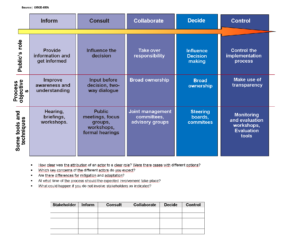
What stakeholder needs to be involved for each concrete action, ways to involve them; (from being in charge of steering to implementing, to only being informed/providing information),
Understanding interests and conflicts, level of influence, etc;
Capacity works references and references from course of management of multi-stakeholder processes
This provides basic information / tool for other stakeholder related tools
Focus should be on urban actors.
Tool should include a “smart” option (digital tool, e. g. SDG ranking via smart phone by citizens) in the long run (to be developed later)
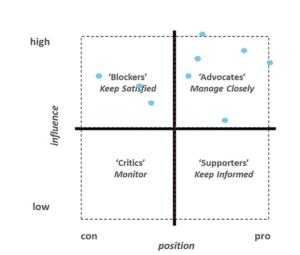
Actors deal with certain issues generaly in a non-neutral way. Actors do have different concernment (objective and subjective), different interests (conflicts and synergies) and different legitimate power (decision and influence in decision), different capacities
Build on Step 2 of tool 2.1 (SDG Wheel)
Step 1. For each SDG Category with high ranking and with low ranking:
List all urban stakeholder inolved and all stakeholders not involved that should have been involved
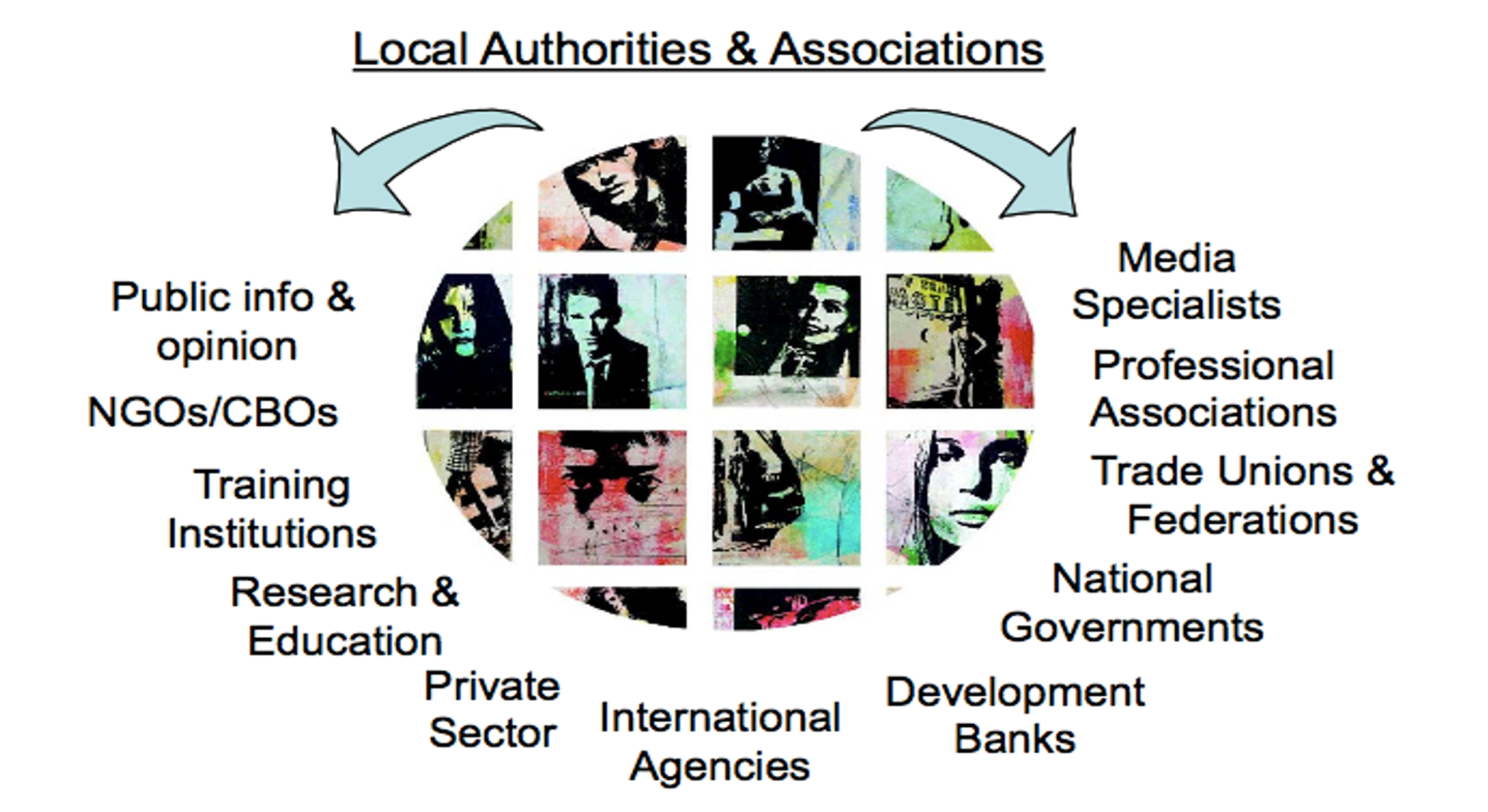
Stakeholder categories
Public , Private , Civil Society
local and central government departments, political representatives, organisations responsible for infrastructure, CBOs, NGOs, residents’ organizations and chamber of commerce
For each SDG category with high ranking and with low ranking:
List all urban stakeholder inolved and all stakeholders not involved that should have been involved
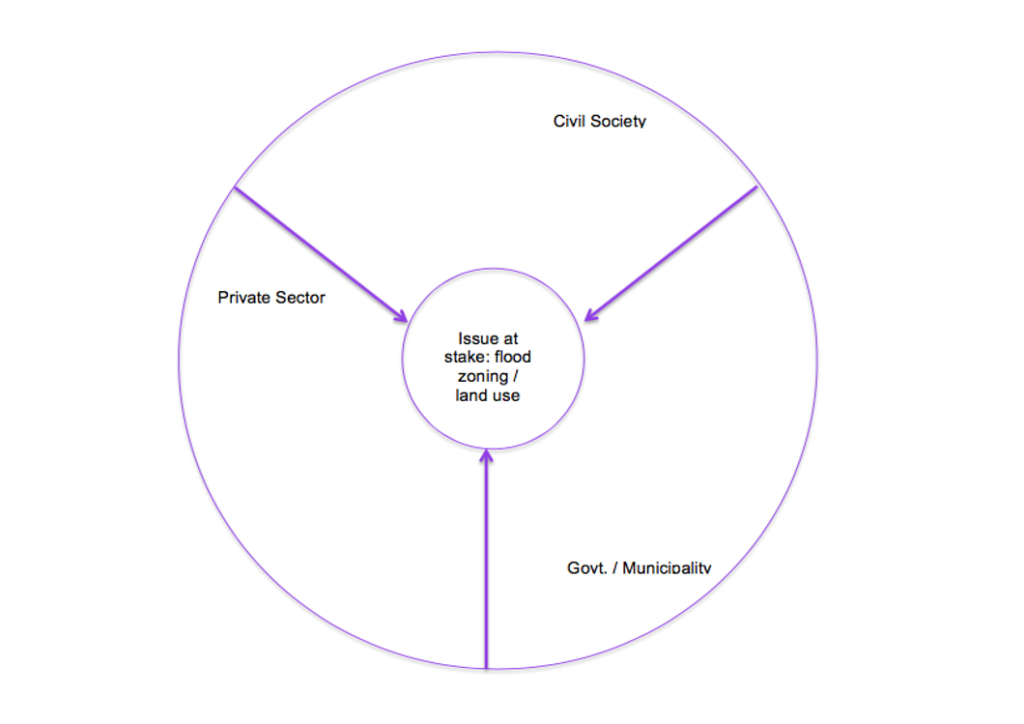
Mapping them in the onion stakeholder diagram.
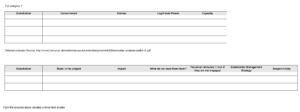
| SDG Categories ranked bad | Urban stakeholders involved | Urban stakeholder not involved but that should have been involved | Other comments |
| example | X | X | X |
| SDG Categories ranked good | Urban stakeholders involved | Urban stakeholder not involved but that should have been involved | Other comments |
| example | X | X | X |
Onion Diagram for Stakeholdre mapping (Source; Cites and Climate Change Training)
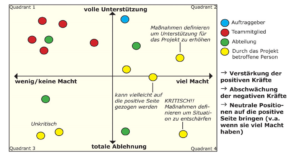
Develop a stakeholder map using the scheme below (see Scheme 1). The relevant stakeholders’ names should be written on cards, wherein the color of the card symbolizes the function of the stakeholder (one for key stakeholder, one for secondary stakeholder, one for veto-player)
Analyse the interactions between the stakeholders by using the following lines in the stakeholder map (strong cooperation, weak cooperation, conflicting relationship)
Lines/arrows indicate the level of influence: the closer to the center, the stronger the influence.